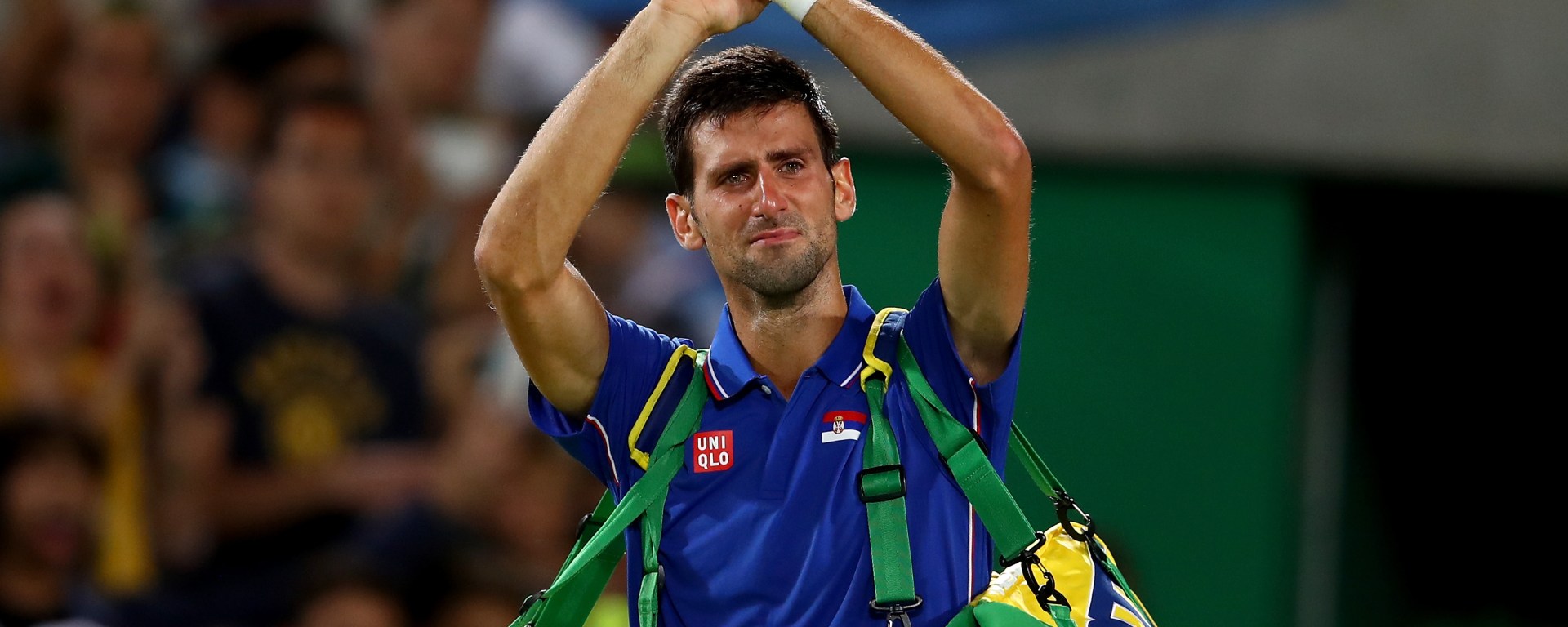
Forget everything you’ve ever been taught about ‘taking it like a man’.
In early June, Novak Djokovic finally won the French Open to complete the career grand slam and put his name alongside the tennis greats. No sooner than he had won, he screwed up his face, tensed his muscles and prepared to unleash a flood of tears. But no tears were forthcoming.
He tried again at least two more times but his eyes remained as dry as the Sahara Desert. Inside there was a part of him panicking, and thinking: ‘Come on Novak, you have to cry. They’ll never love you as much as Federer if you don’t show the appropriate level of emotion.’
It wasn’t quite the people of North Korea straining to cry like their lives depended on it (because they literally did) after Kim Jong-Il died, but it wasn’t far off.
If you remember Roger Federer breaking down in tears after winning his first Wimbledon title, it was a seriously emotional moment. By the time he had won seven though, he just seemed like a guy who could turn the waterworks on and off at will.
Two months after Roland Garros the tears finally did flow for Novak Djokovic, but not tears of victory. After defeat to Juan Martin Del Potro, the man who has won everything there is to win in tennis, a Serbian national hero, is now unlikely to ever win an Olympic gold medal for his country. Now that’s something to really cry about.
The traditional perception, which has a lot of logic to it, is that if you cry when you lose you are weak, and maybe even a bad loser. However if you win you’ve earned the right to act in whatever way you want. But then why is it we tend to suddenly fall in love with a loser who cries?
I’d argue that Andy Murray won over more detractors the day he broke into tears looking absolutely disconsolate after losing the Wimbledon final to Roger Federer than he did the following year when he again broke into tears after coming back to win it.
Then just last week there was British taekwondo fighter Lutalo Muhammad who lost his gold medal fight in the most dramatic way possible. With the clock stopped on one second remaining, he was ahead on points and knew he just had to keep out the way of Ivory Coast fighter Cheick Sallah Cisse. But when the fight restarted, Cisse somehow managed to land a kick to the head before the time ran out and snatch the gold medal.
Here was Muhammad’s interview afterwards.
If he had taken the PR approach and said he was proud to win the silver, that it didn’t quite work out for him this time and that he hoped to come back and win the gold in Tokyo, we might have questioned his temperament and how he managed to lose a fight with half a second left.
But instead every viewer watching this knew that if they were in the same situation, no amount of PR training would be able to stop them balling their eyes out not just in the interview but all the way home. Like with Djokovic, there was a raw sincerity to it that just isn’t there from most sportsmen who cry after a victory.
When you lose, the last thing you ever want to be seen doing is break down in tears. So when an athlete does, it proves they are human.
 Sam Street Sports