A breakaway tournament is better than the rigged new Champions League format.
As Leicester cruised into the Champions League places last season and eventually to the title, I imagined the teams they could face. Barcelona, Juventus, Bayern Munich etc.
I thought how fantastic it would be to see my team, Watford, in the same situation, testing themselves against the best Europe has to offer.
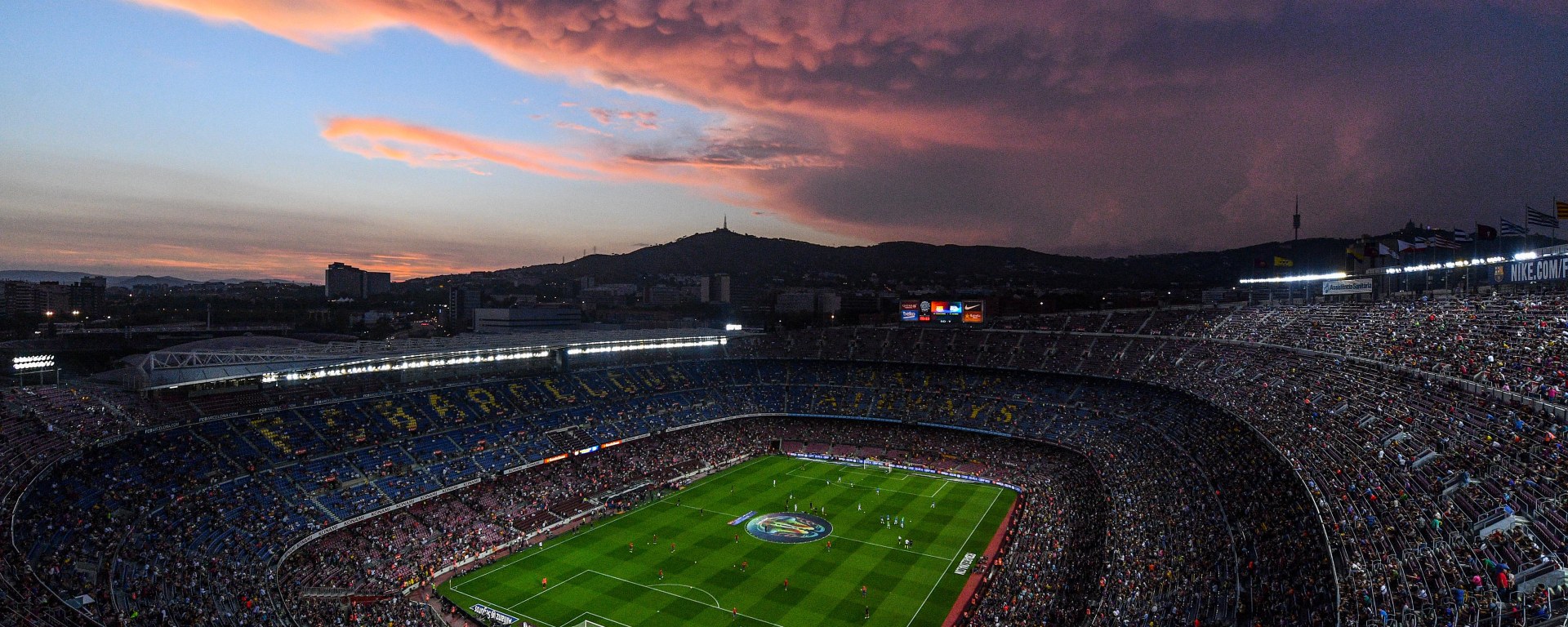
At the same time however, I thought about how seeing Watford challenge Barcelona at the Nou Camp would mean everything to me, but inside the stadium there would be tens of thousands of paying customers who couldn’t care less about the contest and just wanted to say they’d seen a handful of star players.
Meh, I can get that at the Emirates.
When I think about it I’d rather have a genuinely new experience watching my team somewhere truly intimidating like Napoli or Legia Warsaw with opposing fans who still see the game the way I do, refused to just support a top club and would watch their team no matter what level they play at.
That’s the European football we love and that’s why it was so desperately disappointing to see the likes of Borussia Dortmund and Atletico Madrid come up agonisingly short in recent Champions League finals.
As it happens, Leicester did end up in a group with the latter type of clubs I described, being drawn with Porto, FC Copenhagen and Club Brugge.
But Champions League groups with those types of clubs will soon be a thing of the past.
This is all thanks to the restructuring of the Champions League, carried out by the empty shell that was once UEFA and excellently reported here by Martin Samuel.
To summarise quickly, the part you heard about was that England, Germany, Spain and Italy will get four automatic Champions League places, regardless of performance, forever.
Despite Italian sides’ consistently poor performances in Europe over the past five years, it can be argued there is still some fairness in a move which enforces the logical idea that the fourth place team in Italy tends to be better than the top team in Belarus.
However what hasn’t been as readily mentioned is that there is a new rankings system based partly on ‘historical merit’. So AC Milan, who haven’t made it into Italy’s top six in the past three years, have suddenly gone from the 25th best team in Europe to the 9th best team in Europe, just because of European Cup triumphs dating back to the 1960s.
What’s more, prize money has been adapted so that where before, 40 per cent of money from TV deals went to the participating clubs from the national associations which earned the deals (English clubs were the biggest beneficiaries as the country’s deal with BT accounted for £1bn of UEFA’s total receipts of £2.4bn), now just 15 per cent will go to participating clubs from each association and the rest will go to clubs all around Europe depending on their ranking.
This means Milan will be in the top ten recipients of Champions League TV money even if they don’t qualify for Europe and the TV companies therefore aren’t even paying to broadcast them.
It’s astonishing to see an association like Italy so spectacularly rewarded for failure. Football in Italy right now resembles the 1990s in post-communist Eastern Europe. Universal disinterest, crumbling state-owned stadia and brutal police repression.
The only Italian team to achieve anything recently in Europe is Juventus, and they have put their national rivals to shame. After being relegated for match fixing in 2006, Juve decided things had to change. They saved up and moved out of the hated Stadio Della Alpi into a new home, 100 per cent owned by the club.
Unlike Milan and co, Juventus weren’t happy with mediocrity. They did things the English way and are now reaping the benefits of capacity crowds of 40,000 turning up every week to a brand spanking new stadium any team would be proud to call home.
It would have only taken one or two other teams to put in half the effort Juventus did and then maybe Italian football wouldn’t have been languishing in the doldrums and crying to UEFA to try and cheat its way back to its former glory.
Not to mention the part that greed from clubs like Milan refusing to agree to collective bargaining on TV rights played in making Serie A a one-horse-race.
But why did UEFA cave into such unreasonable demands? Their excuse up until today’s election was that the new Champions League was the only way to prevent the continent’s biggest brands breaking away to form a European Super League.
However, new UEFA president Aleksander Ceferin has stated clearly that he believes the Super League idea to be a bluff that UEFA should call.
The reality, as Martin Samuel mentioned, is that, in the absence of effective post-Michel Platini leadership, responsibility for decision making fell to diehard AC Milan supporter and UEFA director of club competitions Giorgio Marchetti, who not only agreed to most of the top clubs’ demands but fast tracked the deal to ensure that whoever was elected UEFA president could do nothing about it.
Former Slovenian FA president Ceferin says he is a virulent opponent of the new Champions League format and his first task as UEFA president will be to try to renegotiate the deal.
If the top clubs are unwilling to negotiate, he should go further. A logical first step would be sacking Marchetti on the spot for showing such blatant disregard for the authority of UEFA.
Secondly, when the next renegotiation of the Champions League format comes around, he should put all his cards on the table, call the bluff of Europe’s biggest clubs and say that UEFA will agree to nothing less than the restoration of today’s format. If these clubs decide to form a European Super League, so be it.
This Super League will fail for one reason, the respect that fans all around the world have for the competitive nature of football. Take the thousands of Thai people in bars with Leicester shirts when the club won the Premier League. Sure, fans in growth markets such as Asia and North America love a brand, but they aren’t stupid. They can see the difference between genuine competition and being sold a dummy.
Meanwhile in the UK, fans of teams like Man United will soon get bored of the same repetitive fixtures and flights to Europe for away games while the rest of us, the paupers, will be happy in our full stadiums watching genuine competition and not missing the Man Uniteds and Arsenals of this world the slightest little bit.
A European Super League would mean that all the Man United fans that ever came to places like Watford and sung ‘you’ve only come to see United’ would soon find out how wrong they were.
On the continent, a slimmed down UEFA would usher in a golden era of European football the way we used to know it. Teams like Everton and Celtic would compete against the likes of Ajax, Red Star Belgrade and Porto, who contributed just as much to European football as self-entitled clubs like Milan, in a competition that football-lovers actually care about.
So, Man United, AC Milan and friends, be my guest and create a European Super League. But don’t come crawling back if it all goes wrong.
 Sam Street Sports